
Find Your Hang: A Guide to the Yoga Wall

Decompress your spine, deepen your practice, and relieve daily stress with the supportive strength and traction of the Yoga Wall.
What Is the Yoga Wall?
Whether you are a seasoned yogi or someone just beginning your movement journey, you may be looking for ways to deepen your practice, safely explore new poses, or simply find relief from the daily grind of gravity. In my classes here in Austin, one of the most transformative tools I introduce to students is the Yoga Wall. It is not just a piece of equipment; it is a gateway to better alignment, deeper relaxation, and functional strength.
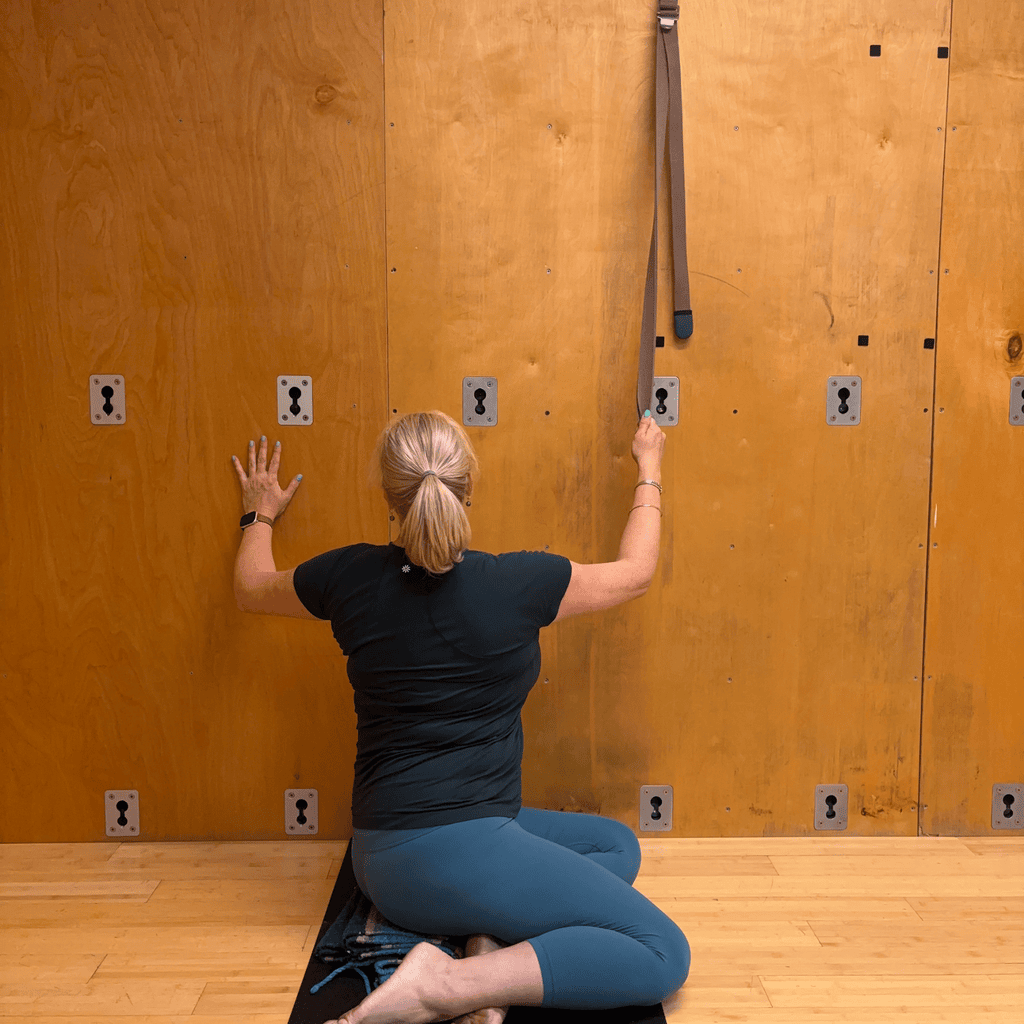
At its core, the Yoga Wall is a modular system featuring a grid of plates on the wall where adjustable straps and swings are securely attached. While standard yoga props like blocks and belts help improve your practice, the modern Yoga Wall takes this concept to the next level by creating an entire support system. It acts as a versatile training tool, integrating the principles of yoga, Pilates, and strength training into a single, cohesive practice space.

How Does the Yoga Wall Work?
The magic of the Yoga Wall lies in the tension and stability it provides. By using the wall as an anchor, you can perform yoga poses (asanas) or targeted exercises with a level of support that is often impossible to achieve on a mat alone. Straps help seat specific bones in the joint or provide counterbalance, while wall bars allow for effective push-pull actions.
Because the wall stabilizes your body, you can focus entirely on the mechanics of a movement, allowing you to work deeper into the exercise with optimal alignment and muscle engagement. If you are learning a new position and find the intensity of the belts or swings challenging, remember that this is a customizable experience. We can always adjust the angle, intensity, or incorporate additional props to ensure your practice remains safe, effective, and ultimately rewarding.
What Are the Origins of the Yoga Wall?
The concept of using the wall for support is rooted in history. Ancient yogis practiced Yoga Kuruntu, or “Yoga Puppetry,” utilizing the natural environment—vines and tree branches—to support their practice. In the 1960s and 70s, BKS Iyengar modernized the practice with a system of ropes attached to the wall. In the 1980s, Kedric Wolfe developed the Great Yoga Wall, creating the current, adjustable system of belts and plates that we use in contemporary studios today to provide a safer, more accessible experience for everyone.
Who Should Practice Yoga Wall?
The Yoga Wall is truly for everyone. Whether you are a beginner who needs extra support to access poses, or an advanced practitioner looking to add a new level of challenge to your routine, the system adapts to you. The belts are fully adjustable to accommodate all heights and body types, and the supportive nature of the wall is incredibly friendly to those navigating limited motion or recovering from injuries. Because every setup is customized to your specific needs, you are always working at the right level of tension and support.


How Can Yoga Wall Help You?
Activate Your Body
Gravity is a constant force, and for many of us, the time we spend sitting at a desk or driving creates repetitive stress patterns in the body. The Yoga Wall serves as an antidote, allowing us to test and change our usual relationship with gravity.
By exploring poses on the wall, you gain access to stretches and twists that simply aren’t possible on the mat alone. The belts and swings provide traction for better alignment and resistance for deeper release. Perhaps most significantly, the wall allows for safe, inverted hanging. This counters the downward pressure of gravity on your spine, helping to decompress vertebral disks and release tension in spinal muscles and nerves. This process improves circulation and can help rehydrate your fascia.
This change in perspective also improves your proprioception—your body’s ability to sense its position in space. By resetting the brain to fire up stabilizer muscles, you’ll improve your core stability and balance. You will often notice that you leave a class walking a little taller with naturally improved posture.
Calm Your Mind
The benefits extend far beyond the physical. The Yoga Wall is a powerful tool for calming the nervous system. Because the wall provides support, you can hold poses for longer durations, which helps activate the parasympathetic nervous system—the “rest and digest” state of the body. When your body is fully supported in space, your mind is finally given the permission to relax.
If advanced poses seem like a challenge, the wall provides the stability needed to achieve poses that may have previously felt inaccessible. Inversions, in particular, can offer a shift in mental perspective, enhancing concentration and clarity. Many students find that restorative series, such as Aadil Palkhivala’s Spinal Rejuvenation Series, promote a deep vagus nerve release, leaving them in a profound state of relaxation.

Customer Favorite Poses on the Wall
Inversions & Hanging Poses
Remember the joy of hanging upside down on a jungle gym as a kid? The Yoga Wall helps you rediscover that sensation while providing structural safety. Some of our most popular poses include:
- Downward Facing Dog (Adho Mukha Shvansana): We treat this as our home base. Using the wall to support your hips with a belt or swing provides extra lift, allowing you to focus on lengthening your spine and back body. It is also a gateway to inversions as your head below your heart.
- Hanging Bat (Baddha Konasana): This is the ultimate hang in Yoga Wall. The swing provides deep compression on the hip flexors and helps release the psoas, offering incredible spinal traction.
- Legs-up-the-wall (Viparita Karani): A true safe haven. This inverted forward bend is perfect for relieving tired legs, improving blood flow, and quieting the mind.
The Spinal Rejuvenation Series
Created by Aadil Palkhivala of Purna Yoga, this restorative series is a student favorite. It allows you to explore all planes of spinal movement—flexion, extension, rotation, and lateral flexion—while in suspended traction. By allowing the spine to hang, you create the space necessary for new blood flow and increased traction.
What Else Can Be Done on the Wall?
Pilates and More
While the roots of the wall are in yoga, its versatility is unmatched. We can translate many movements from Pilates, which typically utilizes spring resistance on a Reformer or Cadillac, directly to the wall.
Whether you are performing the Spine Stretch Forward to articulate your vertebrae, using the swing for Planks to challenge your core, or using resistance bands for Standing Arms work to activate the biceps and triceps, the wall provides unique feedback. From Side-Lying Leg series that ensure hip alignment to Lunges and Squats that isolate the glutes and hamstrings, the Yoga Wall is a dynamic partner in your fitness journey.
Find Me in Studio
Join me for weekly classes Austin, Texas.
